
How to Choose the Right Golf Ball for Your Game
Five simple steps to choosing a golf ball that suits your budget, short game, preferred feel and ball flight, without overcomplicating the decision.
GOLF EQUIPMENT
Ben Frost
2 min read
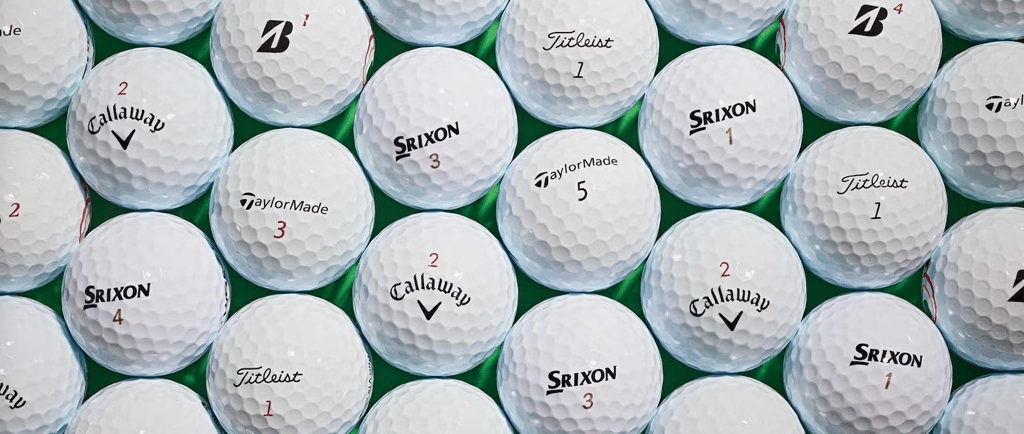

Choosing the right golf ball doesn’t need to be complicated.
Here are five simple steps to help you find one that suits your game.
1. Start With Your Budget
First, decide how much you want to spend.
If you regularly lose several balls during a round, there’s little point paying premium prices. A good mid-priced ball will probably offer better value.
If you rarely lose balls and want the best possible performance, a premium ball may be worth considering.
Choose a price range you’re comfortable with before comparing performance.
2. Prioritise Your Short Game
Your short-game shots should be a major factor in choosing a golf ball.
Within your budget, look for a ball that gives you the greenside spin and control you need.
Higher-spinning balls can help you stop chips and pitches more quickly, particularly when playing shots where the ball needs to stop soon after landing.
If you prefer to let the ball roll towards the hole, you may not need as much spin.
Choose a ball that suits the way you play around the greens.
3. Choose the Feel You Prefer
If several balls perform similarly, use feel to help make your decision.
Some golfers prefer a softer feel, while others prefer a firmer response, particularly when putting and chipping.
Neither is automatically better.
Choose the ball that feels best to you.
4. Check Your Iron Ball Flight
If you’re still deciding between a few options, compare their flight with your irons.
Shots flying too low: Consider a ball that launches higher.
Shots flying too high: Consider a ball with a lower flight.
Happy with your trajectory: There’s no need to change it.
Remember that the ball isn’t the only factor affecting trajectory. Your club, loft, technique and impact conditions all play a part.
The aim is to find a ball that produces a useful flight and gives you enough height and stopping power on your approach shots.
5. Check Your Driver Performance
Finally, compare how your preferred balls perform with your driver.
Look at distance, trajectory and consistency.
A ball that performs well around the greens and with your irons should ideally perform well with your driver too.
If you’re having a professional equipment fitting, you can choose your preferred ball first and then optimise your driver settings around it.
Don’t sacrifice the performance you need on your scoring shots just to gain a small amount of driver distance.
One Important Exception
If one part of your game is costing you significantly more shots than anything else, deal with that problem first.
For example, if you’re regularly hitting drives out of play but your short game is already strong, improving your driving may have a much greater effect on your scores than changing golf balls.
A lesson or driver fitting could make a bigger difference.
Once you’ve addressed that weakness, you can choose a ball that complements your game.
Your Golf Ball Checklist
Before deciding, ask yourself in this order:
Does the price suit my budget?
Does it give me the short-game control I want?
Do I like how it feels?
Does it produce a suitable flight with my irons?
Am I happy with its driver performance?
You don’t need the most expensive golf ball. You need one that suits your game.
Once you’ve found a ball you’re happy with, try to stick with the same model. Using different balls from round to round can change your distances, spin and feel, making it harder to develop consistency.
Connect
Stay updated with our latest offerings.
Follow
Stay in the loop
Email Ben directly here:
© 2026 Dollar Golf. All rights reserved.